
the canada line is the best transit line ever built
Published:
When most people try to make a list of the best transit lines in the world, they list things like capacity, ridership, grade separation, reliability, speed, and user experience. While all of that is a fine list of attributes good transit has, what it doesn’t grapple with is the purpose of transit. This may be a controversial stance among my fellow transit advocates, but I do not believe transit should exist simply for the sake of existing. White-elephant transit projects with abysmal ridership like the Sheppard Subway waste public funds that could be used to improve transit in other areas and thus cannot be considered good transit lines. Under utilitarian philosophy, the purpose of the government—and by extension the public works projects that the government executes—is the collective maximization of social utility.
This is because public tax money is the coerced property of the taxpaying populace; it is not the innate property of the government. Furthermore, public capital has multiple competing uses: education, healthcare, government assistance programs. A dollar of public money, spent on a design decision that does not generate at least a proportional dollar of public benefit, is welfare that was stolen from the public and burned. Likewise, if a more expensive design decision is expected to generate greater marginal benefit than the marginal cost of the decision as compared to the cheaper alternative, then it is the government’s duty to pay for that design decision through the means available to it, such as issuing bonds or increasing taxes. Failing to do so leaves social welfare uncaptured, which is a violation of the government’s purpose for existing. Therefore, a transit advocate who wishes for 80m platforms must justify who is paying for those platforms: which student must sit in a modular classroom because their school’s capital expansion plan was left unfunded; which patient needs to wait an extra hour in the emergency room because the government did not have money to hire more doctors; which mother must go hungry to fund an empty box of concrete they did not ask for; which low-income neighbourhood does not get bus service. They must justify why the marginal benefit of that scope change exceeds the marginal cost of it, and why their concrete box represents a better use of public funds than a new school, hospital, or bus route.
The different inputs of transit—construction method, procurement, rolling stock selection, grade separation, signalling, stations, and supporting infrastructure—can be thought of as market goods wherein an inefficient allocation of resources results in deadweight loss. This means that the best transit line is the one that most successfully maximizes social welfare by exhibiting negligible deadweight loss, wherein feasible design changes do not meaningfully increase net benefit.
A couple of things to note with this definition. First, “net benefit” does not just mean construction costs and fare revenue, but also all relevant externalities, including option value, value of time savings, construction disruption, wider economic benefits, crowding penalties, operational expenditure, and distributional effects. Second, the definition does not consider scale except in the context of the corridor upon which the line is built. Something like the Yamanote Line is not automatically the best transit line in the world because it has the highest capacity; the definition again comes down to the existence or absence of deadweight loss. Third, the definition is centred on the transit line, not the overall policies of the agency or the wider network of the city it is built in; agency policies, fare prices, and operational choices are not fundamental design choices of the line, but inputs that can be changed after the fact. Fourth, the definition considers the line as built, inclusive of all renewal decisions and expansion choices or lack thereof, each evaluated on a net present value basis (NPV) with the base year fixed at the time the decision was made—this is particularly relevant for 100+ year old legacy lines like the Yamanote Line. Fifth, the definition is ex-post. All decisions are evaluated based on their realized outcome based on the most recent data available. Some decisions may be seen as optimal at the time; however, if they generate current and ongoing deadweight loss, then they are not economically optimal.
Why this definition? I do not think that the best transit line in the world is simply the one that is the longest, biggest, or carries the most people. The Yamanote line carries a lot of people, not because it is brilliantly designed or particularly innovative, but because Tokyo just happens to be the biggest city in the world. The point is not that the Canada Line is literally the best transit line ever built under every conceivable definition. Rather, what I care about is the utilitarian purpose of transit: the best transit line turns taxpayer money into public benefit in the most efficient manner possible using the most innovative and cost-effective methods reasonably available; based on the core metric that transit should be judged by—how efficiently it benefits the people that paid for it—the Canada Line is possibly the closest conceivable example of perfection. The way I aim to show this to be true is first by showing that every single common criticism people level at the Canada Line is, in fact, evidence of its success under the framework established; then, I will explain the innovation showcased by the Canada Line in delivering value for money through automation and key alignment modifications; and finally, I will show that comparative global lines, often cited to be model examples of good transit, actually demonstrate substantial deadweight loss and therefore cannot be considered the best.

You’re wrong, actually
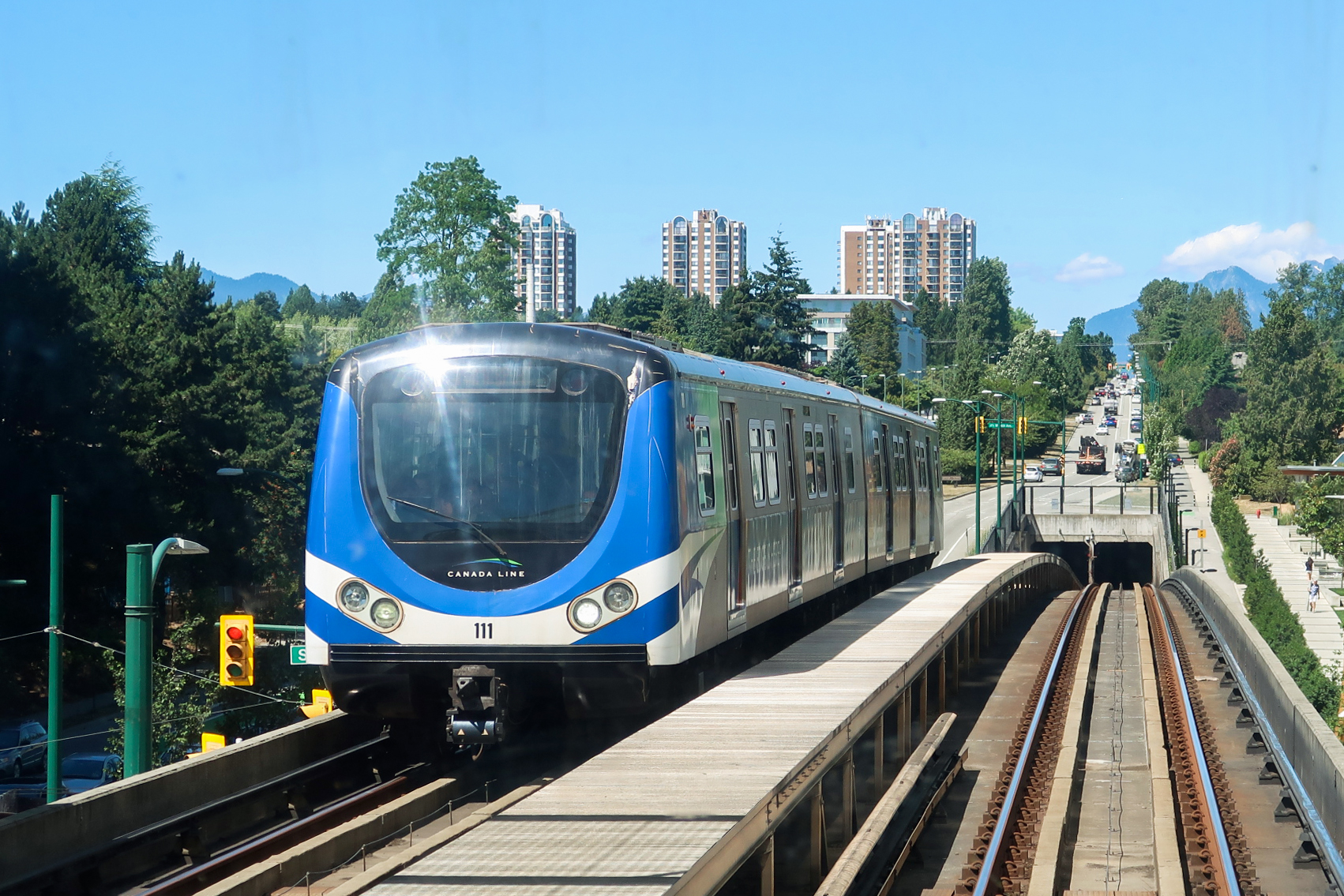
Of course, one cannot talk about the Canada Line without addressing the overarching public narrative that the line was “underbuilt”.
As I brilliantly argued in my previous essay,1 the Canada Line is built with the economically optimal amount of capacity based on standard infrastructure economics evaluations. The Canada Line currently operates at approximately 6680 passengers per hour per direction (pphpd),2 against a peak-hour peak-segment demand of 4600 pphpd.3 Translink forecasts demand will reach 9600 pphpd in 2050,4 given the completion of major redevelopment such as at Oakridge, and the completion of the Broadway Subway. This remains well within the design capacity of the line, which is 15000 pphpd when operating 3-car trains at a comfortable 120-second headway using the Seltrac S40 signalling system.5 Thus, the capacity of the Canada Line is well matched for the corridor it serves. Perceptions of crowding originate from the late 2010s, when peak ridership was growing and close to the operated capacity,6 7 and the additional rolling stock units needed to meet demand had not yet been delivered and deployed. Since the crowding was temporary, not a fixed infrastructure constraint, not a representation of extreme crush loading or infrastructure failure, and addressed within a reasonable time frame through the simple act of ordering and deploying more trains, it does not represent deadweight loss.
Designing the Canada line with either a lower or a higher ultimate design capacity results in a line with lower net economic benefit. The two cases are as follows. If the Canada line was designed with lower capacity, say limited to 2-car operations forever, the retained option value for expansion past 10000 pphpd is zero. That is to say, the economic benefit of the line is capped for minimal savings in construction cost. Limiting the system to two-car train operations would only reduce platform length from the current 50m to 40m or 35m, saving minimal excavation while capping capacity at a scale that could reasonably be exceeded within the evaluation horizon. In contrast, designing the Canada Line with significantly larger capacity, say the 80m platforms and 20000+ pphpd of the Expo Line, would have resulted in significantly higher costs while providing little additional economic benefit. This is for 2 reasons. Firstly, the marginal cost of additional excavation for station construction is extremely high. This is because larger areas of excavation require more soil removal, more utility relocation, and more disruption. For the Eglinton Crosstown, for example, station construction was the most expensive line item and accounted for nearly half of the total capital cost.8 Second is the discount rate math and evaluation horizon used by economists that devalue future benefits in favour of more immediate ones. One dollar in 2050 is not worth the same as one dollar in 2004. Debt carries interest, and future costs and benefits are discounted using a discount rate to account for the opportunity cost of capital and uncertainty about future benefits. If the benefit of 20000+ pphpd capacity is not realized until 2070 or possibly never, those benefits are discounted so heavily—on the order of less than 1/20th their original value when assuming a 5%* real discount rate1—that they almost always become outweighed by the present value cost of construction. This is why, around the world, governments do not build metro systems with 200m platforms and 10-car trains unless demand strictly requires it. A dollar today is worth more than a dollar in 2060. A line that retains over a 50% capacity reserve after 41 years of operation is not undersized; it is built to an economically optimal size.
I have seen people argue that station circulation will be binding before train capacity—this is factually incorrect. The Schedule 6 amended and restated proposals document states this clearly: “Station egress capacity has been sized to provide for the 15000 pphpd ridership requirement.”5 There is also a misconception that the 15000 pphpd design capacity represents a crush capacity. This is not correct; according to the same document, the 15000 pphpd requirement is achieved by assuming a design loading assumption of 4pax/m^2 standing density with all seats occupied on a three-car train5 (which, as I previously detailed, uses three full-length cars and not some bespoke mini-car insert).1 The procurement documents are clear: both the station egress capacity and the train capacity have been designed to reach the 15000 pphpd ridership requirement under standard assumptions.
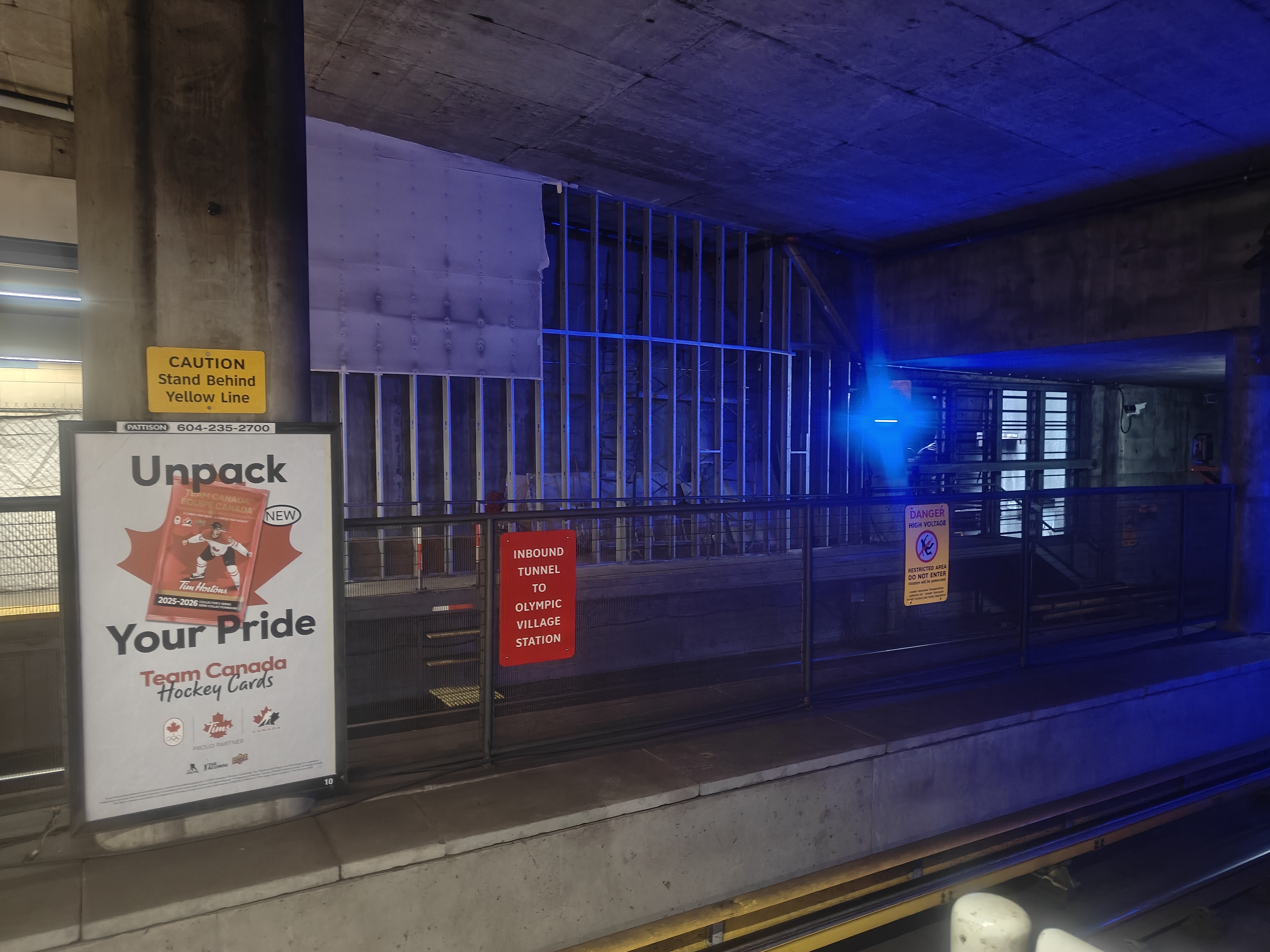
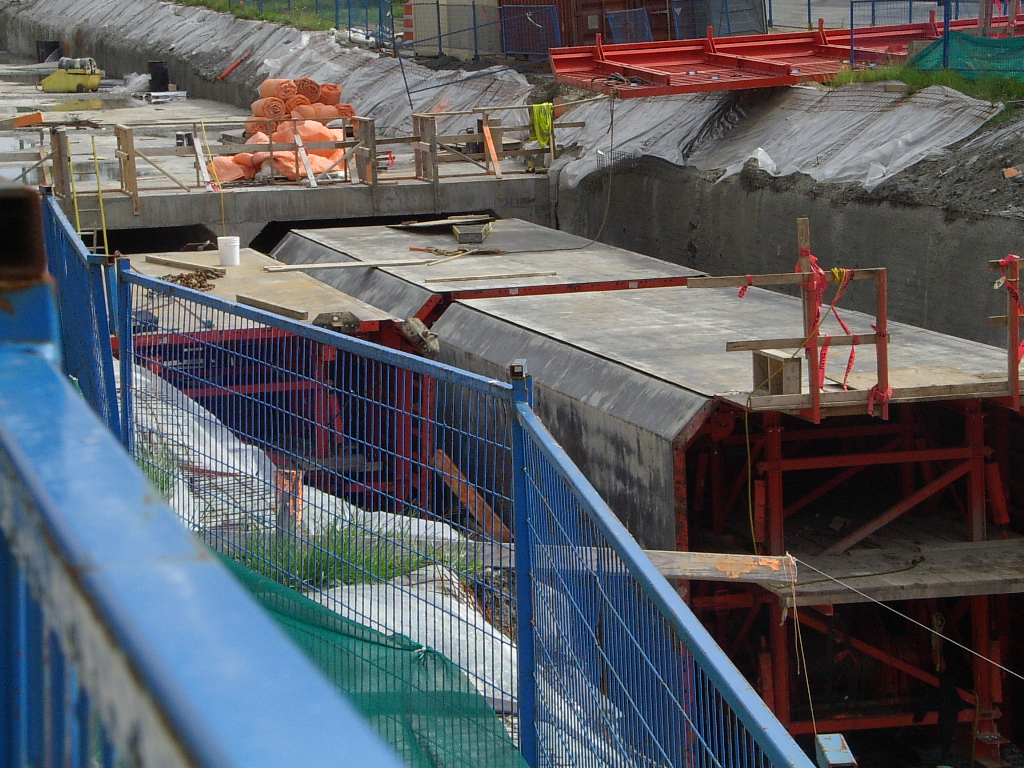
The second common criticism is the choice of cut-and-cover construction. I have four responses:
First, and this is fatal to the alternative, choosing a bored tunnel does not remove disruption; it merely relocates it elsewhere. This is the exact finding of the British Columbia Court of Appeal in Susan Heyes Inc. (Hazel & Co.) v. South Coast B.C. Transportation Authority, 2011 BCCA 77.9 As the Honourable Madam Justice Kathryn E. Neilson details in her decision, the bored tunnel “required a large construction site and tunnel access shaft to launch the tunnel-boring machine on Cambie Street between Broadway and 10th Avenue, necessitating traffic closures for up to two years,” and “a large construction site for tunnel entry at Broadway and 37th Avenue, as well as an exit shaft at 19th Avenue.”9 As such, she found that it was reasonable for RAVCO to believe the “nuisance-causing potential of both construction methods [to be] comparable.”9 Because both construction methods would have caused a similar level of overall disruption, the disruption was an inevitable consequence of the project, and the mere existence of an alternative construction method that shifts the disruption onto a separate party does not defeat the defence of statutory authority.
Second, even assuming a bored tunnel would have caused literally zero disruption, the total utility gained by the region through additional transportation investments and projects outweighs temporary business losses. At the time of project selection, the bored RAVxpress proposal was $565 million more expensive and thus, according to Justice Neilson, was “not a viable alternative”9 given the project’s funding constraints. A few dozen businesses, even if we estimate their losses at half a million dollars each, do not outweigh the direct positive utility of hundreds of millions of capital savings, as that capital could and in fact was reallocated towards other regional priorities such as the Evergreen Extension and the Broadway Subway project.
Third, critics ignore the immense ridership and utility benefit of cut-and-cover over bored tunnels. As Justice Neilson details in Heyes v. SCBCTA, shallower tunnels increased ridership by making the “stations more accessible and thus more attractive to users,” which “better served the Canada Line objectives of reducing vehicular traffic and pollution.”9 According to the Canada Line Final Project report, the proposed SNC-Lavalin proposal achieved $148 million NPV greater incremental ridership revenues over the public sector comparator, in part due to shallower stations.10 Furthermore, every meter of reduced depth is value of time savings, compounded for every rider, for the entire lifespan of the line. Cut and cover enables shallower stations, increases ridership, decreases travel times, and increases revenues. The deep bore alternative is not only more expensive, but objectively a worse transit line for the people that rely on it.
Fourth, choosing a bored tunnel would have introduced unacceptable schedule risk that would have posed a major hurdle to the hard Olympics deadline. As Justice Neilson details, “RAVxpress had less ability to accommodate delays,” in particular because “in the event of equipment breakdown, cut-and-cover construction could continue at other sites, while construction in a bored tunnel had to halt.” Because one of the core project requirements was completion by November 2009, this contributed to her evaluation of the bored tunnel as not a “feasible alternative”.9
Given these findings, the court unanimously concluded in Heyes v. SCBCTA that the bored tunnel represented neither a feasible nor a non-nuisance alternative, and therefore did not operate to defeat the defence of statutory authority. RAVCO did the difficult thing few transit agencies are willing to do in North America. They said: the temporary disruption of a few dozen businesses to save the public millions of dollars of recurring value of time savings and hundreds of millions of dollars in capital savings is a worthwhile tradeoff, because the alternative is neither less disruptive nor feasible. There is no conceivable way that the choice to construct the Canada Line using cut-and-cover can be seen as deadweight loss.
The third criticism is single-tracking the branch termini. Essentially, the argument here is simple: single-tracking has essentially zero economic drawback for immediate, undiscounted construction cost savings. First, because the branch frequency is half the trunk frequency, the branch termini do not need to be double-tracked to maintain adherence to minimum headways on the trunk, where the majority of peak-hour demand lies. Second, automation and the Seltrac moving block signalling system allow for near-perfect adherence to schedules in single-track termini, meaning the reliability and redundancy benefit is already captured. The fact is, a system that achieves 120-second trunk headways and 99.9% availability and 99.8% schedule adherence11 does not meaningfully benefit from double-track termini because there are negligible reliability, capacity, or value of time savings to capture.
The fourth criticism is network interoperability. I have four responses here:
First, network interoperability is not free. At the Best and Final Offer (BAFO) stage, the RAVxpress proposal, which used Expo Line-compatible rolling stock, required an additional $565 million in public funding. Building a compatible line at a minimum would have meant excavating every station to 80m and installing linear induction rails across the entire line, costing in the hundreds of millions. Furthermore, if Translink actually wanted to leverage the ability to move trains between the lines, they would have needed to construct a non-revenue track connection between the two lines, likely at the cost of tens of millions and requiring significant disruption to Expo Line service. Building a “compatible” line means inheriting all of the constraints of the legacy system, often at great cost. Building a separate line leads to inheriting absolutely zero of those legacy constraints, which allowed SNC-Lavalin to engineer the perfect system for Cambie from the ground up.
Second, the main benefits of the Innovia platform are grade-climbing performance and the ability to navigate small-radius curves. The Canada Line does not benefit from these features because it is a relatively straight and flat metro line in Richmond and Vancouver.
Third, the Innovia platform is functionally single-source**, whereas the chosen proposal allows for competitive bidding on rolling stock and systems. The Innovia platform used on the Expo Line has only been produced in North America by Alstom/Bombardier, and this poses significant risks if production is unavailable, parts break, or a new batch of rolling stock is needed. In contrast, the Canada Line uses off-the-shelf rolling stock and parts, using third rail, rotary motors, and standard-size metro cars.
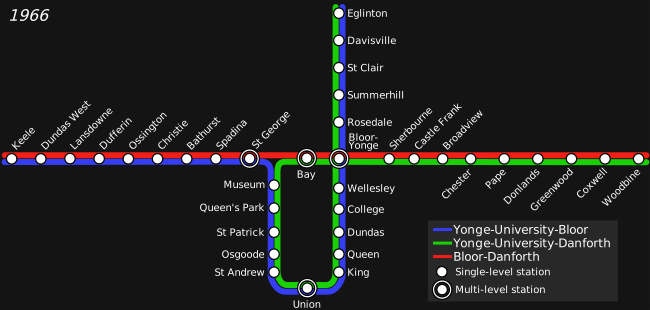
Fourth, Network interoperability is incredibly overrated and has next to zero real-world benefit in metro systems that already have multiple yards. By the time a line needs a separate operations and maintenance facility, the economies of scale that come with interoperability essentially disappear because the entire fleet is already located in a separate depot. In fact, the TTC has recently announced that Line 2 will receive Seltrac Communications-Based Train Control (CBTC) from Hitachi instead of the Alstom Urbalis system installed on Line 1.12 Note what this actually proves: the revealed preference of the largest transit agency in Canada, one which used to interline trains between the University Line and Bloor-Danforth Line,13 is to pick competitive procurement over interoperability and vendor lock-in.

The fifth critique is the overarching sentiment that Public-Private Partnerships (P3s) are inherently bad or that the Canada Line P3 produced suboptimal outcomes compared to a public sector comparator (PSC). This is not true for several reasons:
One, as I will explain in the next section, the P3 created demonstrably positive innovation compared to the original conceptual reference alignment. This includes both shallower stations, reduced utility relocations, and the preservation of the Cambie Heritage Boulevard.
Second, the P3 demonstrably transferred considerable risk to the private sector. This included schedule risk, cost overruns, performance risk, and geotechnical risk. RAVCO specifically valued the geotechnical risk assumption at ~$215 million CAD.9 Under the framework, demonstrated outcomes beat hypothetical harms, and the demonstrated outcome was that the Canada Line came on budget and ahead of schedule.
Third, the independent value for money analysis conducted by PricewaterhouseCoopers (PwC)10 indicated the accepted proposal was approximately $92 million CAD cheaper on a present value basis in the median case, substantially reduced risk, and had considerably higher projected ridership than the PSC. That is to say, the demonstrated outcome of the P3 was that the innovation and risk transfer were real, not hypothetical, and resulted in the public receiving a cheaper and more useful project.
Fourth is the revealed preference of the preferred proponent themselves. SNC-Lavalin exited the lump-sum turnkey (LSTK) contracting market in 2019 after facing financial difficulties,14 citing the risky nature of LSTK contracting and the low margins associated with the market. The fact that one of the main players in the Canadian market decided to give up on the LSTK market entirely shows that, at least in general, the contracts were effective in their intended purpose of transferring risk to the private sector at a low cost. SNC-Lavalin would not have quit the entire market if they were making billions by pricing risk at a steep premium.
This is not to say that P3s are the answer for every transit project ever conceived. P3s are a tool, not a one-size-fits-all solution, and I do not think they should be used without carefully considering if the public sector could realistically complete a project at lower cost. However, note that the framework we are judging transit lines by evaluates lines on their outcome—the P3 in the Canada Line demonstrably reduced costs, produced innovation, and transferred substantial risk away from the public sector. Therefore, the decision to continue with a P3 cannot be seen as a deadweight loss.
The real innovation
The best transit line uses innovation not as a method of political cowardice but as a tool for delivering the best possible value on the taxpayer dollar. It is under this principle that multiple design choices of the Canada Line can be seen as highly innovative and deliberate rather than compromises. Two design choices stand out in this regard. The deliberate rejection of the surface hybrid, which enables full GoA4 operations, and two innovative alignment choices, including cut-and-cover over the sewer main at 8th Ave and the choice to use cut-and-cover instead of an open trench between 49th Ave and Marine Drive.
First, and perhaps the most important design decision, as outlined in the Schedule 6 amended and restated proposals document and the Canada Line BAFO Stage Report,15 Serco/SNC-Lavalin and the RAVCO evaluation committee considered two fundamentally different alignments in Richmond—an elevated and surface hybrid concept—along No. 3 Road. RAVCO specifically noted that the surface concept would have lower ridership, longer travel times, and severe traffic limitations, including reducing the number of streets crossing No. 3 Road to four and banning all left turns off No. 3 Road. Furthermore, the alternate proposal was 90 million dollars more expensive on an NPV basis when considering operational costs, reduced ridership revenue, and construction costs. Specifically, building a hybrid system would require more expensive vehicles needed to operate in both manual and automatic control modes, longer platforms to achieve the same capacity, higher operational costs, and less frequent service, which would reduce ridership and revenues. This is in contrast to Eglinton Crosstown, which deliberately chose this compromised hybrid model for political reasons, took 15 years to build, went several billion dollars over budget, and now is permanently constrained by a surface section and is therefore unable to run unattended train operations (UTO), uses 90m platforms to achieve the same design capacity as the Canada Line achieves with 50m, and essentially runs half as frequently as the Canada Line. The innovation here is simple. Run short trains more frequently, shrink all your civil infrastructure as a result, and use those savings and additional ridership revenues to grade-separate the entire thing and implement full automation.
Second, SNC-Lavalin developed two innovative alignment changes that differed from the original reference design. The first is the tunnel alignment along Cambie near 8th Avenue, specifically regarding a problematic sewer main. As outlined in Heyes v. SCBCTA, RAVCO originally envisioned, as part of their reference design, that this segment would need to be in a deep-bore tunnel, as the sewer main along 8th Avenue was deemed to be immovable. SNC-Lavalin, however, engineered a method to construct this section of the line using cut-and-cover, bridging over the problematic sewer main instead of going under it. This not only resulted in substantial savings but also greatly decreased schedule risk and further increased the accessibility of the nearby 2nd Avenue (Olympic Village) station and Broadway-City Hall station due to substantially decreased station depth. Second, SNC-Lavalin developed an innovative alignment south of 49th Avenue that avoided utility relocation costs. RAVCO envisioned that the alignment south of 49th Avenue would be in surface or trench, since it was assumed that this would be cheaper than a tunnel. The Bombardier-led RAVxpress proposal, for example, proposed a trench along the median of Cambie St south of 49th Ave. SNC-Lavalin, however, realized that the approach required an extremely expensive relocation of existing utilities, namely high-voltage power cables and a water main. When factoring in the cost of utility relocation, the cut-and-cover approach was cheaper than a trench in the road median.15 This also preserved the Cambie Heritage Boulevard, which was a major qualitative factor that supported this decision.
All factors considered, every design choice of the Canada Line can be seen as likely economically optimal under a standard evaluation framework; furthermore, SNC-Lavalin demonstrated genuine novel innovation in developing the alignment over the 8th Avenue sewer main and along the northbound lanes of Cambie, which resulted in reduced capital cost, increased ridership, and the preservation of historical greenspace. It is likely not possible to change some design characteristics of the Canada Line to generate greater net economic benefit, and therefore, the amount of deadweight loss generated by the line is negligible.

The meaning of “best”
Naturally, showing that the Canada Line should be considered a model of excellence requires direct comparison against the strongest global peers. I will compare the Canada Line against several lines commonly cited as among the best transit lines in the world: The Copenhagen Metro M1/M2 and M3 Cityringen, the Madrid Metro line 12, and the Yamanote Line.
First, Copenhagen. The Copenhagen metro is widely praised for its automation and capacity through frequency. However, it has four fatal flaws: it is critically underbuilt, has a legacy signalling system, requires a highly expensive resignalling project, and suffers from delivery issues, including schedule delays and cost overruns.
Despite running at minimum headways, M1 and M2 experience frequent passups and crush loading during rush hour, demonstrating deadweight loss. Metroselskabet researched the possibility of adding a 4th car to the line and determined that it would cost approximately 5.5 billion DKK ($1.2 billion CAD), including major station overhauls, the cost of acquiring a new fleet, a signalling overhaul, new platform screen doors, and upgraded power systems. This would cause several partial and complete station closures, require extensive single tracking, and result in economic disruption valued at 3.7 billion DKK. ($800 million CAD).16 Due to the disruptive nature of adding this additional capacity, Metroselskabet instead decided that the best way to fix the capacity issues was to build a separate relief line, M5, currently in the planning stages. Line M3 does not fare much better. Because it was designed to be interoperable with M1/M2, it inherits the same 3-car trains, and despite opening in just 2019, it is already experiencing similar capacity constraints. This is in strict contrast to the Canada Line, whose stations are explicitly designed for the design capacity of 15000 pphpd and does not require any disruptive civil works to reach the stated design capacity.
Furthermore, M1 and M2 rely on a fixed block Ansaldo STS signalling, and as such, Metroselskabet is currently investing in a signalling overhaul to replace the legacy system with moving block CBTC to increase reliability and increase capacity by about 20%, which will likely cost around 1 billion DKK. In contrast, the Canada Line was equipped with state-of-the-art moving block Seltrac S40 CBTC on day one. Retrofitting an active line with a completely new signalling system is one of the most expensive technological retrofits a line can have. The fact that ongoing capacity constraints have forced Copenhagen to spend a billion DKK just for a 20% increase in capacity shows that the original design of the line was too conservative relative to actual ridership. Had Copenhagen installed moving block CBTC and sized station circulation and platform screen doors properly for the 4-car train setup from day one, there would be no need to contemplate these billion-dollar retrofits on an active line. As well, both M1/M2 and M3 suffered from delivery issues, going over budget and behind schedule.17 18 In contrast, the Canada Line requires no signalling retrofit and was delivered within the agreed-upon budget and three and a half months ahead of schedule.
In short, the Canada Line was delivered on budget, ahead of schedule, has a more advanced signalling system, has a higher capacity, and requires no major future retrofits. The Copenhagen Metro, while an excellent transit system, is likely underbuilt, is facing ongoing capacity constraints, and suffers from delivery issues that simply did not exist on the Canada Line. The Copenhagen Metro M1/M2 or M3 simply cannot be the best transit line in the world.
The Yamanote Line, despite being on the opposite end of the capacity ladder, cannot be called the best transit line in the world for the same reason: ongoing capacity constraints. Despite receiving multiple upgrades, multiple relief lines, 11-car trains, and running 2-3 minute headways during peak hours, the Yamanote Line consistently has peak hour load factors exceeding 125% and often 150%.19 Due to the severe overcrowding, substantial deadweight loss is generated by the infrastructure of the line as a result of diminished passenger comfort, pass-ups, and increased dwell times. This is not to mention the significant social burden directly enabled by this overcrowding. Japan has a persistent and ongoing issue with sexual assault on public transit. Up to two-thirds of women between the ages of 20 and 40 have reported experiencing sexual assault on trains.20 This is a direct result of crowding-enabled anonymity, making it difficult or impossible to identify and arrest perpetrators. Overcrowding generates massive negative externalities that could be mitigated with additional capacity provisions or relief measures, such as the ongoing resignalling program to replace the current fixed block signalling system with ATACS with ATO to increase capacity.21 Since ATACS with ATO is a technologically feasible design choice that could have been added to the line two decades ago,22 the forgone option to implement this technology at the earliest possible time represents deadweight loss. A line that demonstrates persistent and ongoing crush loading and whose overcrowding enables the exploitation of vulnerable groups is not the best transit line in the world.
The Madrid metro demonstrates excellent project delivery by North American standards; however, it falls short of the Canada Line when it comes to technology and user experience. The Madrid metro relies on Italian broad gauge (1445mm), which complicates train procurement and maintenance compared to standard gauge. Furthermore, the Madrid metro relies entirely on overhead catenary, which increases tunnel diameter compared to third rail and thus substantially increases the capital cost of tunnelling. As well, deep bore tunnelling increases station access time and increases capital cost compared to a more shallow alignment. The lack of automation and infrequent service on Line 12 is a major detriment to the utility of the line, and substantially increases operating expenditure compared to the fully automated Canada Line. Line 12 is also substantially overbuilt for the actual demand it faces. Despite being built to the standards of a heavy metro line, Madrid operates only 3-car trains at 7.5-minute headways during peak hours.23 That is to say, Madrid could have captured the same benefit simply by relying on smaller, shorter trains like the Canada Line and using automation to run more frequent service. Since the line is overbuilt and thus generates substantial deadweight loss, it cannot be the best transit line in the world.
This is not an exhaustive list of every transit line in the world; however, the mechanism of failure for most transit lines is typically the same and falls into one or more of the four categories: underbuilt, over-capacity, overbuilt, or suboptimal technology or alignment choices. Since the Canada Line does not demonstrate substantial deadweight loss, whereas global peers demonstrate substantial deadweight loss, the Canada Line is the best model of excellence under the defined framework.
Philosophy 101
As the steward of public funds, the moral duty of the government is to maximize social utility by deploying public services in the most efficient, innovative ways possible; transit, as a public utility paid for through taxation, should therefore be delivered in a way that generates the highest possible benefit at the lowest possible cost. Any inefficient allocation of technology, capacity, or delivery methods represents welfare stolen from the public or left uncaptured, which is a violation of the government’s moral duty under the utilitarian framework of governance.
Therefore—since the purpose of transit is to balance competing inputs in the most efficient way possible—the best transit line in the world is not the biggest, fastest, longest transit line, but rather the transit line that best minimizes deadweight loss. In practice, balancing these inputs in an economically optimal way is extremely difficult and rarely achieved; most lines are either underbuilt, overbuilt, politically compromised, or reliant on technology choices that are sub-optimal for the corridor in question. To maximize economic value, the best transit line in the world needs to demonstrate capacity right-sizing with adequate future-proofing, reliance on the most effective construction methods and alignment choices available, and use of advanced technology like CBTC and automated operations where feasible. When the success of transit is analyzed in the context of its sole legitimate purpose—as an instrument used to deliver social utility—the Canada Line is demonstrably near optimal. The Canada Line represents what is possible when design is driven by purpose and innovation rather than as a political monument or badge of prestige. The Canada Line represents what transit should be; the Canada Line is the best transit line ever built.
Happy 17th Birthday to the Canada Line!
* The 5% real discount rate assumption lines up with BC government business case practice. For example, the Canada Line used a 6% nominal (~4% real) 10 discount rate, and the Broadway Subway used a 6% real (~8% nominal) 24 discount rate.
** The Innovia platform is commonly referred to as “proprietary”; this is factually inaccurate. The core ICTS patents have expired, and as such, Innovia is an open standard. However, the only company with experience producing the Innovia platform is Alstom/Bombardier, and to a lesser extent, CRRC. In 2026, CRRC won an RM1 billion (~$330 million CAD) contract to produce 26 trainsets (104 cars) for the Kelana Jaya Line. 25
the canada line is brilliant, actually - Albert Guo: https://albertguo.com/posts/2026/02/canada-line/ ↩ ↩2 ↩3
SkyTrain Schedules and Maps - TransLink: https://www.translink.ca/schedules-and-maps/skytrain ↩
2024 Translink ridership data: https://public.tableau.com/app/profile/translink/viz/2024TSPR-RailSummaries/TableofContents ↩
Transport 2050 Backgrounder Action 2 Rapid Transit Network: https://ehq-production-canada.s3.ca-central-1.amazonaws.com/6b32eead3114aaa5901a3f6c4b2af8742f3a586b/original/1619810844/58eb7335adbe63fa29ee994860231465_Transport_2050_Backgrounder_Action_2_Rapid_Transit_Network.pdf ↩
Schedule 06 - Amended and Restated Proposal Extracts (2005-07-29) - TransLink Concession Agreement: https://web.archive.org/web/20260217200916/https://www.translink.ca/-/media/translink/documents/about-translink/freedom-of-information/concession-agreement-translink-and-intransit-bc/schedule-06—amended-and-restated-proposal-extracts-_-2005-07-29.pdf ↩ ↩2 ↩3
2019 Canada Line Schedule: https://web.archive.org/web/20191120050143/https://new.translink.ca/schedules-and-maps/skytrain ↩
2019 Translink ridership data: https://public.tableau.com/app/profile/translink/viz/2019TSPR-RailSummaries/TableofContents ↩
Neptis Foundation on costs: https://neptis.org/publications/chapters/costs-0 ↩
Susan Heyes Inc. (Hazel & Co.) v. South Coast B.C. Transportation Authority, 2011 BCCA 77 (CanLII): https://www.canlii.org/en/bc/bcca/doc/2011/2011bcca77/2011bcca77.html ↩ ↩2 ↩3 ↩4 ↩5 ↩6 ↩7
Canada Line Final Project Report: https://www.infrastructurebc.com/wp-content/uploads/2025/01/Canada-Line-Final-Project-Report_12April2006.pdf ↩ ↩2 ↩3
Improving the Canada Line with a digital twin - Engineering Matters: https://engineeringmatters.reby.media/2023/03/13/improving-the-canada-line-with-a-digital-twin/ ↩
TTC Line 2 signalling upgrade: https://www.ttc.ca/news/2026/July/TTC-awards-contract-for-Line-2-signalling-upgrade-to-support-more-frequent-and-reliable-service ↩
Article about Lower Bay station detailing the former 3-line service pattern. https://transittoronto.ca/subway/5006.shtml ↩
SNC-Lavalin exits the lump-sum turnkey market: https://www.atkinsrealis.com/en/media/statements/30-09-2019 ↩
Canada Line Best and Final Offer Stage Report: https://web.archive.org/web/20090304224720/http://www.canadaline.ca/files/uploads/docs/doc177.pdf ↩ ↩2
Copenhagen M1/M2 4-car study: https://www.ft.dk/samling/20191/almdel/TRU/bilag/462/2240485/index.htm ↩
WIT Press eLibrary - Paper UT05015FU (Urban Transport 2005): https://www.witpress.com/Secure/elibrary/papers/UT05/UT05015FU.pdf ↩
Metro City Ring over budget and late - CPH Post: https://cphpost.dk/2014-08-20/news/metro-city-ring-over-budget-and-late/ ↩
Ministry of Land, Infrastructure, Transport and Tourism (MLIT) Press Report: https://www.mlit.go.jp/report/press/content/001758084.pdf ↩
Sexual assault on public transport: crowds, nation, and violence in the urban commons: https://www.tandfonline.com/doi/full/10.1080/14649365.2022.2052170#d1e149 ↩
JR East Press Release (December 2021): https://www.jreast.co.jp/e/press/2021/pdf/20211207.pdf ↩
ATACS overview https://ieeexplore.ieee.org/document/1194672/authors#authors ↩
Madrid Metro Line 12 Timetable: https://www.metromadrid.es/en/linea/linea-12-metrosur#line-timetable ↩
Broadway Subway Project Business Case (March 2018): https://www.broadwaysubway.ca/app/uploads/sites/626/2020/08/Business-Case-FINAL-March-2018.pdf ↩
Prasarana’s procurement of train sets awarded to CRRC - The Sun: https://thesun.my/business/local-business/prasaranas-procurement-of-train-sets-awarded-to-crrc/ ↩